Understanding Different Wig Cap Constructions
Understanding Different Wig Cap Constructions
Choosing the right wig cap construction is essential for comfort and style. There are many types available, each offering different benefits. This article will explain popular cap constructions like frontal wigs, closure wigs, U-part wigs, 360 lace wigs, full lace wigs, and glueless wigs. We'll discuss the advantages and disadvantages of each, helping you choose the best option for your look and lifestyle. Whether you're new to wigs or a seasoned wearer, this guide will help you find the perfect wig cap construction for your needs.

1. Frontal Wig:
A frontal wig has a lace frontal that covers the entire hairline from ear to ear, giving a natural look. The lace is usually Swiss or HD lace, creating a seamless, scalp-like effect.
Pros:
- Natural-looking hairline: The lace frontal covers the whole hairline, making it look like the hair is growing from the scalp.
- Versatile styling: You can style the hair in different ways, like pulling it back into a ponytail or parting it differently for various looks.
Cons:
- Requires adhesive: To stay in place and look natural, frontal wigs often need glue or adhesive, which can be messy.
- Can be expensive: Frontal wigs are often pricier than other types due to the larger lace area.
Overall, frontal wigs are popular for their natural appearance and styling options, but they may cost more than other wig types.
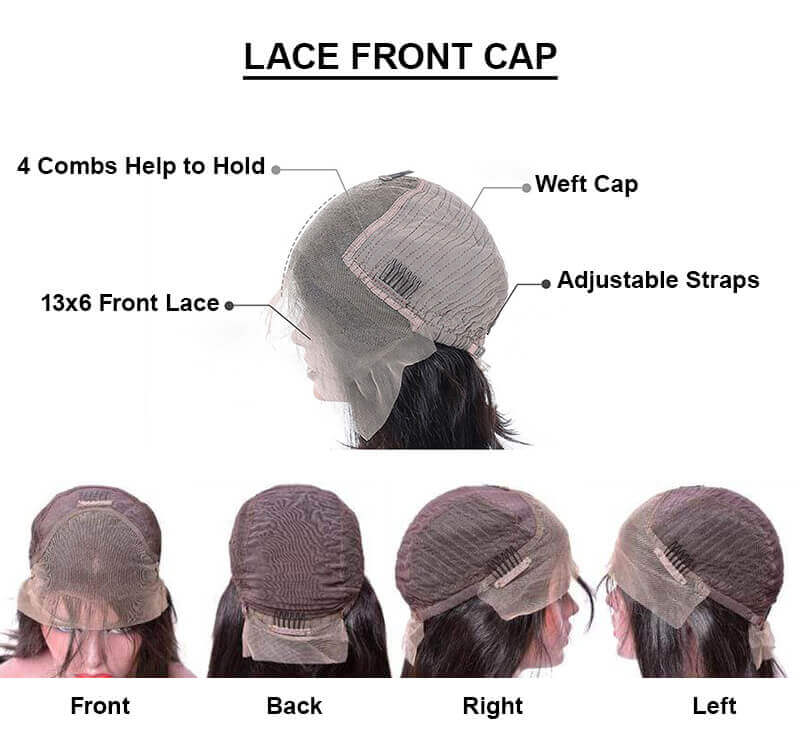
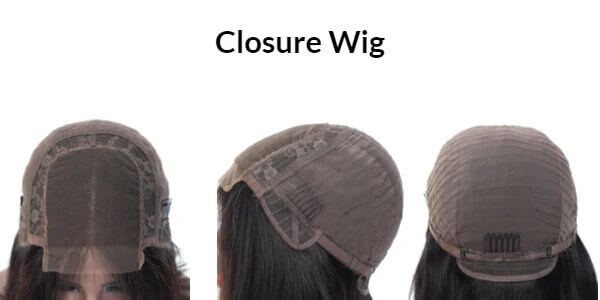
2. Closure Wig:
A closure wig is a type of lace wig that includes a closure piece, typically made of HD lace or Swiss lace, covering from temple to temple. This closure piece mimics the appearance of a natural scalp and parting.
Pros:
- Affordable: Closure wigs are less expensive than frontal wigs due to the reduction of lace.
Cons:
- Limited parting options: Closure wigs come with a smaller lace sheer that covers from temple to temple, allowing parting only on the lace sheer. This limitation results in fewer parting options compared to lace frontal wigs.
- Not as natural as frontal wigs: Since the lace sheer only covers from temple to temple, closure wigs may not provide the same level of comfort and realism as frontal wigs.
Overall, closure wigs are affordable but may have limited styling options and may not offer the same level of comfort and realism as frontal wigs.
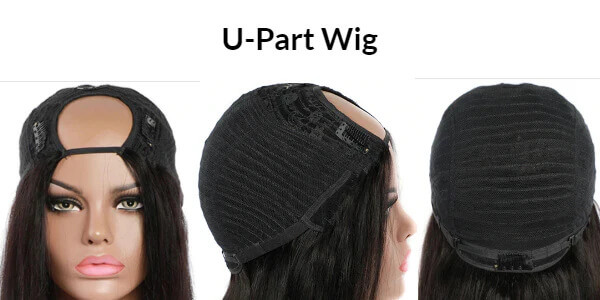
3. U-Part Wig:
A U-part wig is a type of wig that features a U-shaped opening at the top, allowing the wearer to pull a portion of their natural hair out of the cap and blend it with the wig for a seamless look. Unlike other lace wigs, U-part wigs do not have a lace front.
Pros:
- Affordable: U-part wigs are often more budget-friendly than other lace wigs because they eliminate the use of lace, making them a cost-effective option.
- No glue, no lace, easy to install: With no fragile lace to handle and no need for adhesive, U-part wigs are easier to install and remove, making them ideal for beginners and busy women.
Cons:
- Limited styling options: U-part wigs have fewer styling options compared to other wig types because they do not provide a seamless hairline. The natural hairline depends more on the wearer's exposed natural hair outside the wig cap.
- May require blending with natural hair for a more natural look: U-part wigs are more suitable for women with thick hair in the front, as blending thin or sparse natural hair with the wig's hair may result in an unnatural appearance.
Overall, U-part wigs offer the advantage of blending natural hair with the wig for a seamless look, are affordable, and easy to install. However, they may have limited styling options and require blending with thicker natural hair for a more natural look.
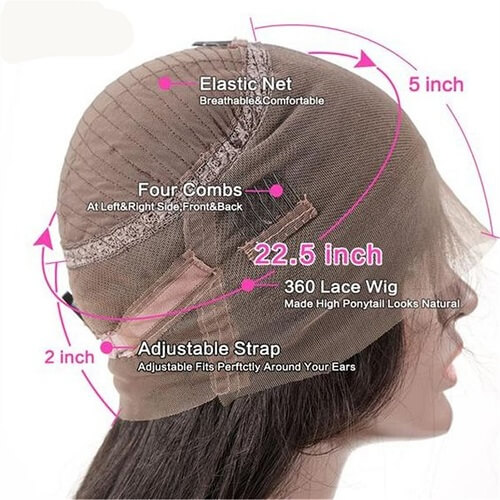
4. 360 Lace Wig:
A 360 lace wig is a type of lace wig that features lace around the entire perimeter of the wig, allowing for a natural-looking hairline all around, which allows for high ponytails and updos.
Pros:
- Allows for high ponytails and updos: The 360 lace wig's design enables you to reveal the wig's edges so you can style your hair in high ponytails and updos.
- Natural-looking hairline around the entire perimeter: With lace around the entire perimeter, the 360 lace wig provides a natural-looking hairline from any angle.
Cons:
- More expensive than other lace frontal wigs and lace closure wigs: Due to more investment in lace sheer, 360 lace wigs are typically more expensive than lace front wigs and U-part wigs.
- Requires more maintenance and care: The lace around the perimeter of the wig requires more careful maintenance to ensure a natural look and longevity of the wig.
Overall, 360 lace wigs offer the benefit of allowing for high ponytails and updos, as well as a natural-looking hairline all around. However, they are more expensive than other lace wigs and require more maintenance and care.
5. Full Lace Wig:
A full lace wig is a type of wig that is constructed entirely of lace, giving the appearance of a natural scalp and hairline. The entire cap of the wig is made of lace, allowing for versatile styling options and a natural look from any angle.
Pros:
- Versatile styling options: Full lace wigs allow for versatile styling, including updos, ponytails, and various parting styles, as the lace cap gives the appearance of a natural scalp.
- Natural-looking hairline and parting: The lace construction of full lace wigs creates a seamless blend with the skin, giving the illusion of hair growing directly from the scalp.
- Premium comfort and breathability: The lace cap of a full lace wig is lightweight and breathable, providing a comfortable wearing experience.
Cons:
- Requires adhesive for a secure fit: Achieving a secure fit with a full lace wig often requires the use of adhesive or glue, which can be time-consuming and may cause skin irritation for some wearers.
- More expensive than other cap constructions: Due to the intricate construction and premium materials used, full lace wigs are typically more expensive than other types of wigs.
Overall, full lace wigs offer versatile styling options, a natural-looking hairline and parting, and premium comfort and breathability. However, they may require adhesive for a secure fit and are generally more expensive than other cap constructions.
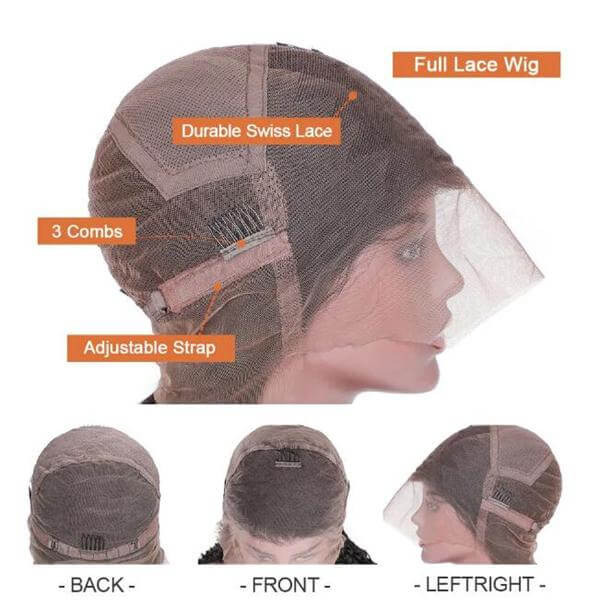
6. Glueless Lace Wig:
A glueless Lace wig is a type of wig that is designed to be worn without the need for adhesive or glue. These wigs typically feature an adjustable strap and combs or clips inside the cap to secure the wig in place without using glue.
Pros:
- Easy to install and remove: Glueless wigs are easy to put on and take off, making them convenient for daily wear.
- No adhesive or glue required: Unlike traditional wigs that require adhesive or glue for a secure fit, glueless wigs can be worn without any additional products.
7. Headband wig:
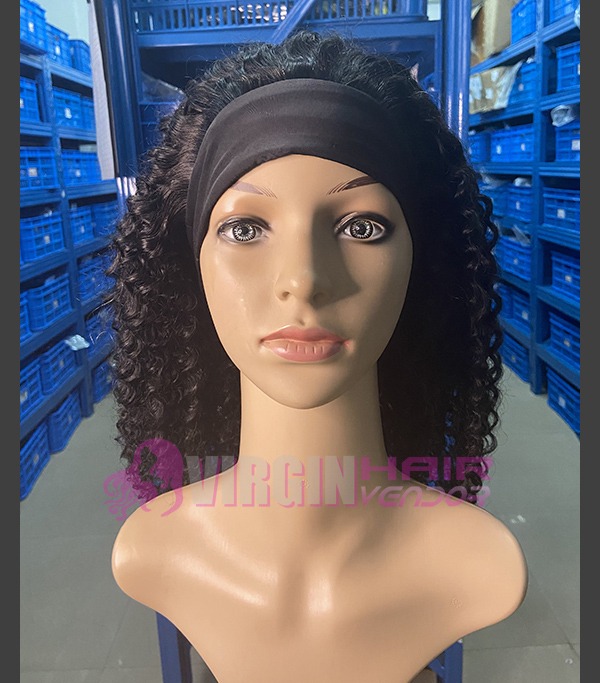
A headband wig is a type of wig that features a built-in headband or scarf attached to the wig cap. The headband or scarf covers the wig's hairline, providing a natural and effortless look. Headband wigs are designed to be worn with the headband or scarf covering the front of the wig, leaving the back exposed.
Pros:
- Quick and easy to wear: Headband wigs are convenient and can be quickly put on without the need for adhesive, clips, or combs.
- Versatile styling: The detachable headband or scarf allows for versatile styling options, including different colors, patterns, and styles to match various outfits.
Cons:
- Limited styling options: While headband wigs offer versatility in terms of headband styles, they may have limited styling options compared to traditional wigs with lace fronts or full lace caps.
- Less secure fit: The headband or scarf may not provide as secure a fit as other wig attachment methods, such as adhesive or clips, which can result in the wig shifting or moving during wear.
Overall, headband wigs offer convenience and versatility, but they may have limitations in terms of styling options.
Choosing the Right Wig Cap
When selecting a wig, choosing the right cap construction is crucial for comfort, style, and overall satisfaction. Here are some factors to consider and tips for selecting the best cap construction for your needs:
Factors to Consider:
- Hair Type: Consider your natural hair texture and thickness. Some cap constructions, like U-part wigs, require blending with your natural hair, which may be easier with certain hair types.
- Desired Style: Think about the hairstyles you want to achieve. Full lace wigs and 360 lace wigs offer more styling versatility, available for updo and high ponytail, while closure wigs and U-part wigs are limited in parting and styling.
- Comfort: Consider how the cap construction will feel on your scalp. Lace front wigs and full lace wigs are lightweight and breathable, offering comfort for long-term wear.
- Budget: Different cap constructions come at varying price points. Full lace wigs tend to be more expensive than closure wigs or U-part wigs due to their intricate construction.
Wig Cap Maintenance
Proper maintenance of your wig cap is essential to ensure its longevity, durability, and overall appearance. Here are some general maintenance tips to keep your wig cap looking its best:
Tip 1: Regular Cleaning: Clean your wig cap regularly to remove dirt, oil, and product buildup. Use a gentle shampoo specifically formulated for synthetic or human hair wigs.
Tip 2: Gentle Washing: Fill a basin with lukewarm water and add a small amount of wig shampoo. Gently swish the wig cap in the water, then rinse thoroughly with cool water.
Tip 3: Conditioning: If your wig cap is made of human hair, you can use a conditioner to keep it soft and manageable. Avoid applying conditioner to the cap's base or roots to prevent slippage.
Tip 4: Air Drying: After washing, gently blot the wig cap with a towel to remove excess water. Allow it to air dry on a wig stand or mannequin head to maintain its shape.
Tip 5: Avoid Heat: Limit the use of heat styling tools on your wig cap, as excessive heat can damage synthetic fibers or cause human hair wigs to become dry and brittle.
Tip 6: Storage: Store your wig cap on a wig stand or mannequin head when not in use to help maintain its shape and prevent tangling. Keep it in a cool, dry place away from direct sunlight and heat sources.
Tip 7: Avoid Friction: Be gentle when brushing or combing your wig cap to prevent tangling and shedding. Use a wide-tooth comb or wig brush designed specifically for wigs.
Tip 8: Handle with Care: Treat your wig cap gently to avoid stretching, tearing, or damaging the lace or hair fibers.
Tip 9: Rotate Wigs: If you have multiple wigs, rotate them regularly to prevent excessive wear and extend their lifespan.
Tip 10: Protect from Environmental Factors: Avoid exposing your wig to harsh chemicals, chlorine, or saltwater, as these can damage the fibers and cause discoloration.
Tip 11: Avoid Sleeping in Wigs: Remove your wig cap before sleeping to prevent tangling and matting of the hair fibers.
Tip 12: Professional Maintenance: Consider taking your wig cap to a professional wig stylist for periodic maintenance, such as trimming, styling, or repairs.
By following these tips, you can enjoy a beautiful and natural-looking hairstyle for many wears to come.
Conclusion:
In conclusion, we've explored various wig cap constructions, each offering unique benefits and considerations. Frontal wigs provide a natural hairline and versatile styling options but require adhesive for installation. Closure wigs offer a natural-looking parting and easy maintenance but may have limited styling options. U-part wigs allow for blending with natural hair but may have limited styling options and require blending with thicker natural hair for a seamless look. 360 lace wigs allow for high ponytails and updos but are more expensive and require more maintenance. Full lace wigs offer versatile styling options and a natural-looking hairline but require adhesive for a secure fit and are more expensive.
When choosing a wig cap construction, it's essential to consider your lifestyle, budget, and styling preferences. Whether you prioritize versatility, affordability, or ease of maintenance, there's a wig cap construction that's perfect for you.
We invite you to explore Virgin Hair Vendor's range of high-quality human hair wigs and extensions. With our wide selection of styles and textures, you're sure to find the perfect wig cap construction to suit your needs. Visit virginhairvendor.com today to discover your perfect look!
Related Articles:
Unveiling the Secrets to 4C Hair Growth: A Comprehensive Guide for Black Women
Exploring the Unique Characteristics of 4a, 4b, and 4c Hair Types
Understanding Human Hair Bulk: A Comprehensive Guide for Wholesale Buyers
What Is Super Double Drawn Hair?